The Humanity Practice Weekly · Practice Note #7
This week I made a business decision that's going to cost me money.
I'm not going to tell you exactly what it is yet — that announcement is coming, sooner than I probably should say. Stay with me.
What I'll tell you now is this: I built something good. Something I could have charged real money for. And I made a different call — one that costs me, and one I'd make again without blinking. I'm going to give it away for free
Here's what surprised me. The decision sounds hard. It wasn't. It was one of the easiest calls I've made all year — because the click had already happened.
A while back, I got crystal clear on the business I'm actually building. Not the enterprise gold rush everyone else is chasing. The small and mid-sized companies most people overlook — the HR-of-one, the founder wearing six hats. And I decided, all the way down, that I am not in the business of taking advantage of the people I'm here to serve.
Simple. Sustainable. Affordable. Premium. For SMBs. That's not a tagline on a slide. It's the filter I run every decision through.
So when the question came, there was nothing to agonize over. My values already knew the answer. The money was real. The choice wasn't.
That's what I keep coming back to this week — and it's what this whole letter is about. Your values aren't a list you wrote down once. They're a filter you decide with. And when you actually know them, the hard calls stop being so hard. You just know.
A value you don't decide with isn't a value. It's a poster.
(The thing I made this decision about? You'll be the first to know. Soon.)
The number
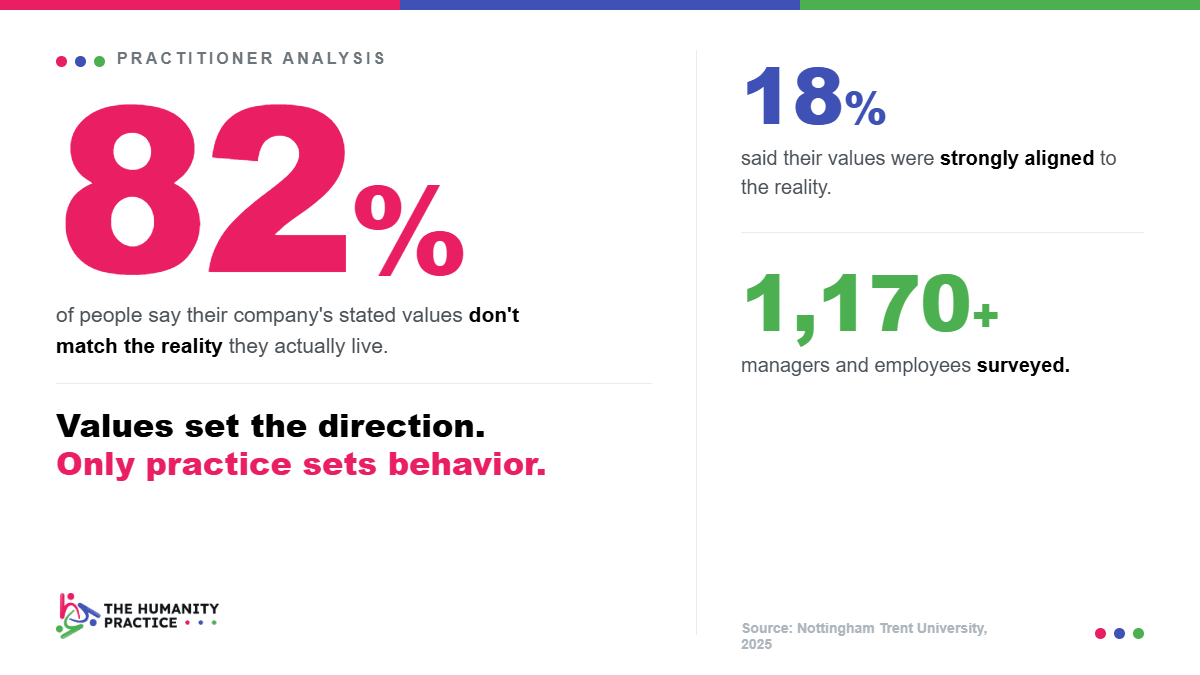
Only 18% of employees say their company's stated values are strongly aligned with the reality of its culture — that's a 2025 Nottingham Trent University survey of more than 1,170 managers and employees. More than eight in ten people are living inside the gap between what their company says it is and what it actually does.
That gap isn't a communication problem. You don't close it with a better poster or a louder all-hands. It exists because the values were stated, not practiced. Values set the direction. Policies set the expectation. Training builds the awareness. Only a practice builds the behavior. That's what we build at The Humanity Practice — and the free Snapshot shows you where your own values and reality diverge.
I broke the whole thing down — including the exact line to forward to your founder — in Tuesday's post. → read it
This week's practice: Name the Moment
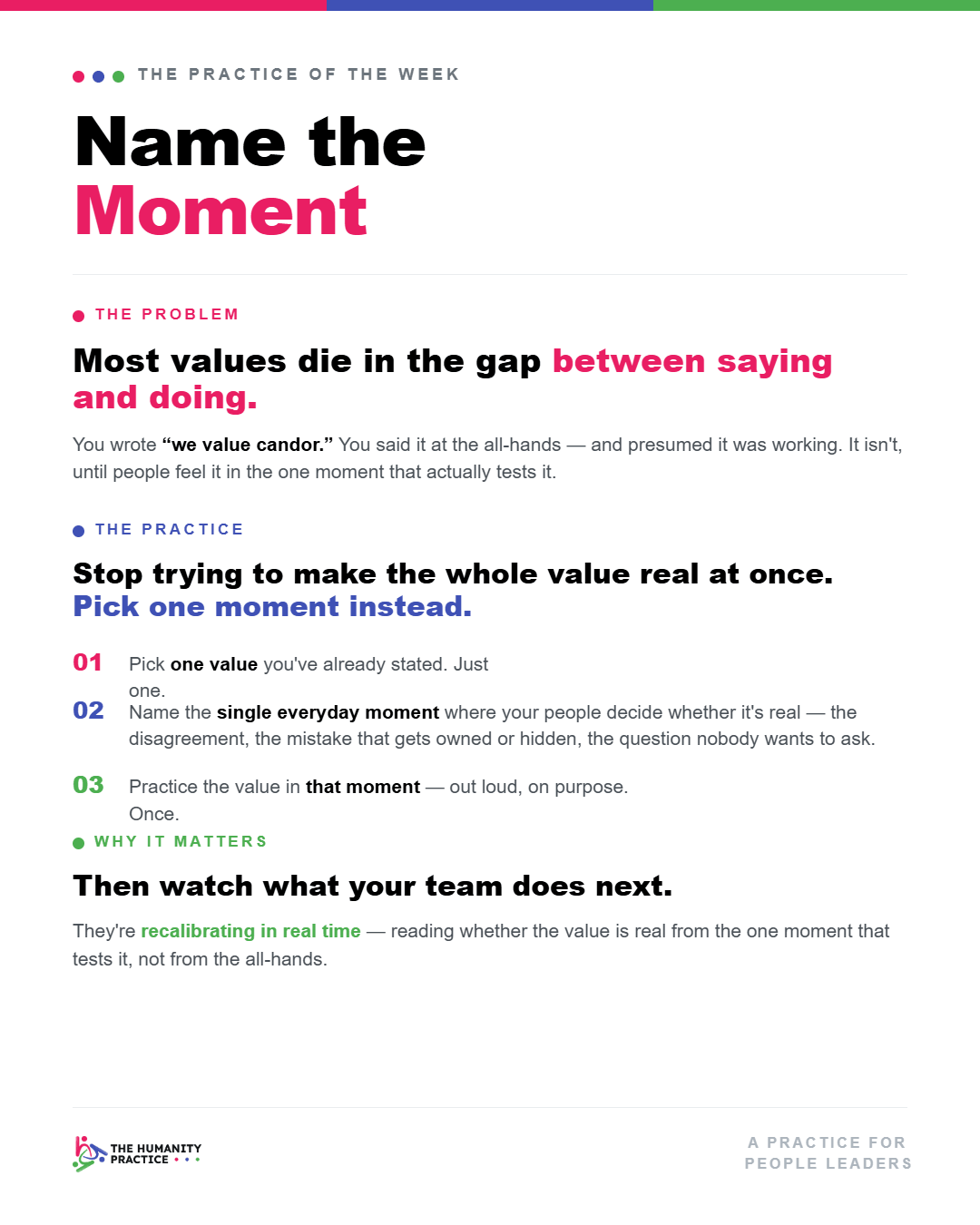
Stop trying to make a whole value real at once. Pick one value you've already stated. Name the single everyday moment where your people decide whether it's real — the disagreement, the mistake that gets owned or hidden, the question nobody wants to ask. Practice the value in that moment, out loud, on purpose. Once. You don't need a committee or a budget. You need one value, one moment, and the willingness to practice it where it costs you something.
The full step-by-step — and how to spot your one moment — is in Wednesday's post.
→ read it
This week's practitioner: Jennifer Brown
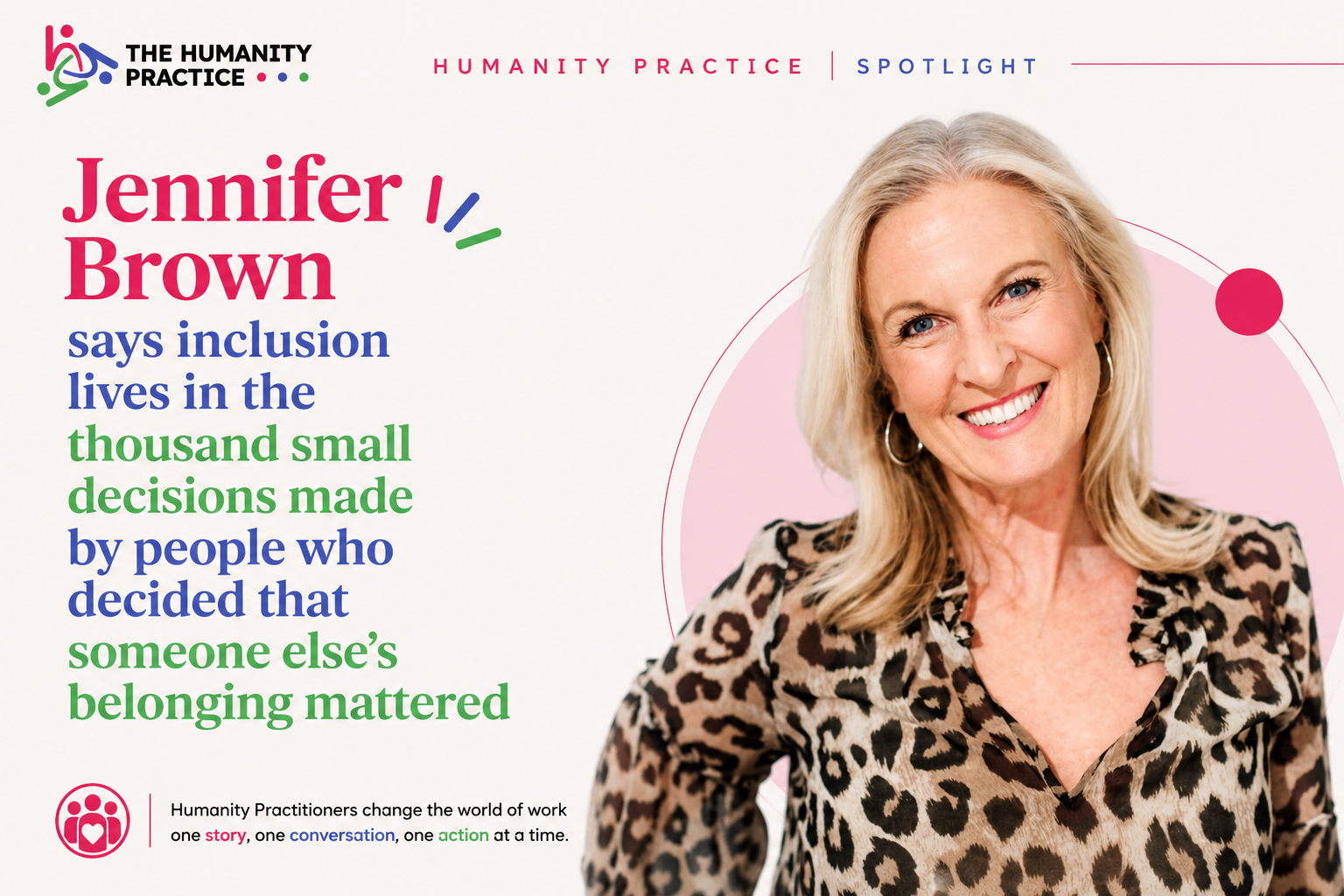
In a season when a lot of companies reach for the rainbow logo, Jennifer Brown named the truth: belonging isn't built in the activation. It's built, as she puts it, in "the thousand small decisions" people make when they decide someone else's belonging matters. That is the whole thread of this week. Values aren't the statement — they're the small decisions. And as she reminds us, the work doesn't end when Pride month does. Go follow Jennifer Brown.
I said more about why Jennifer's work matters in Thursday's post — go show her some love there.
→ read it
Something new — my AI Practice
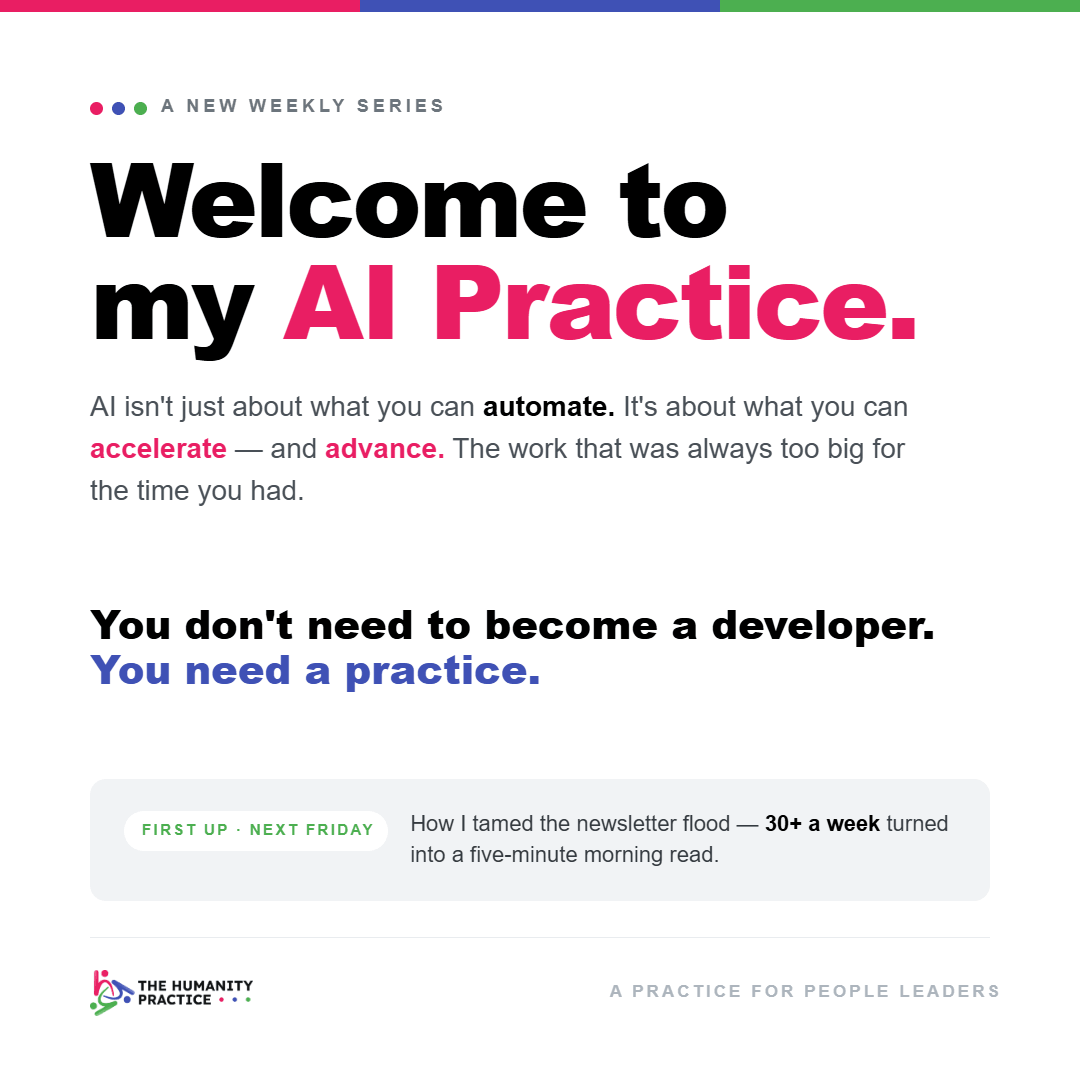
I also started something this week that friends and colleagues have been asking me to share for a long time: my AI Practice. How an outnumbered operator (a full-time career AND a company) uses AI to keep up — and how you can build your own. The first build drops next Friday: how I tamed the flood of newsletters hitting my inbox.
Here's the full intro — and what's coming — in Friday's post. → read it
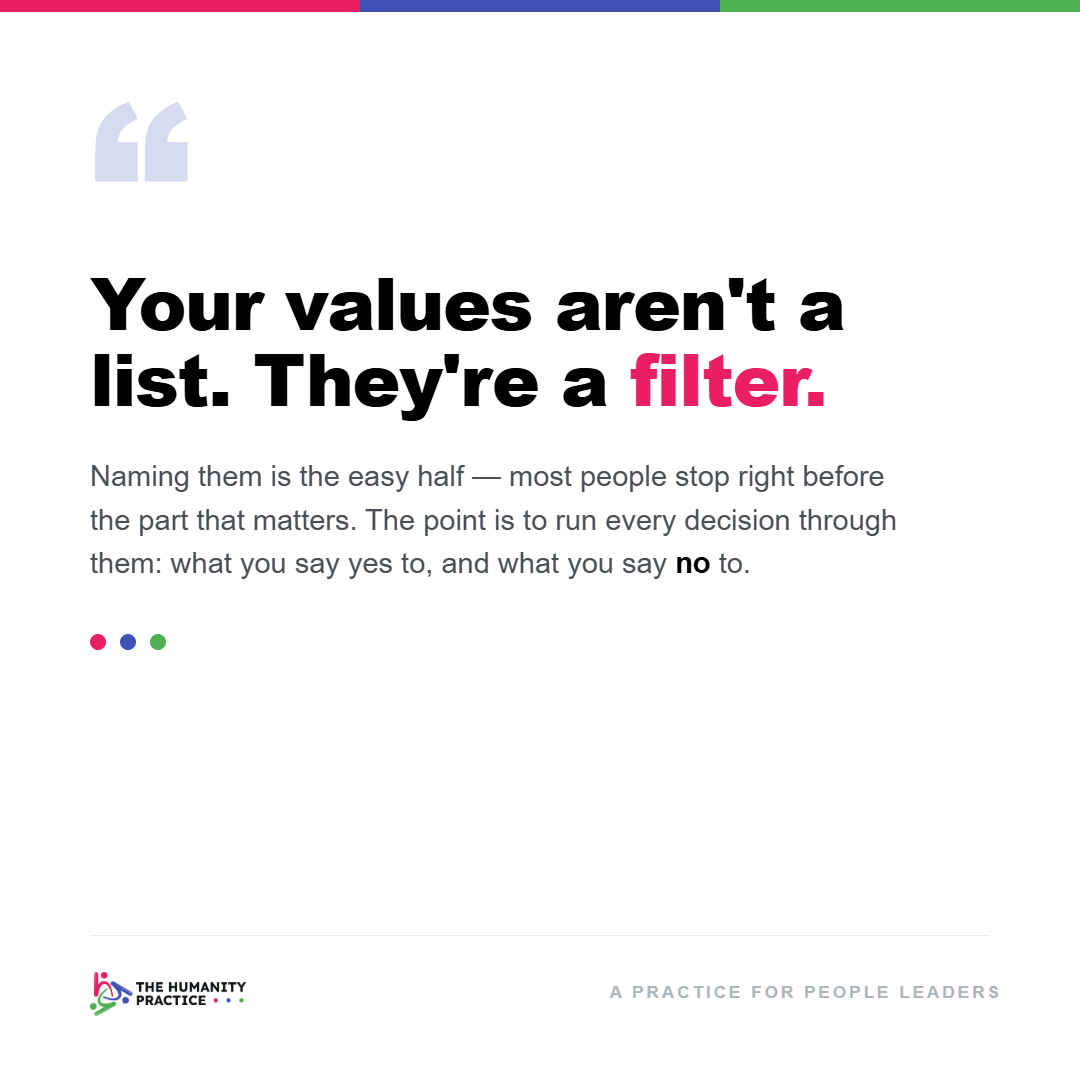
One last thought before I go. The question I keep sitting with isn't "what are our values?" You already have those. It's the harder one: how do you decide, in the everyday moments, when something is actually a values call? That's where culture gets made — not in the statement, in the moment. The words aren't the practice. The moments are.
(This is where the week began. Monday's post has the whole story.
→ read it)
Proud, not perfect,
Rocki
P.S. Want to see your own gap? The free Snapshot shows you where your values and your reality diverge.
→ take the Snapshot
P.P.S. You may notice this letter arrived from a new address — rocki@thehumanitypractice.com. Same letter, new home. If you use filters or a folder for this email, update it so we stay in touch.